Buyer's Guides

7 best eTMF software platforms for clinical trial sponsors

Viedoc Editorial Team

May 20, 2026

20 min read

7 best eTMF software platforms for clinical trial sponsors image

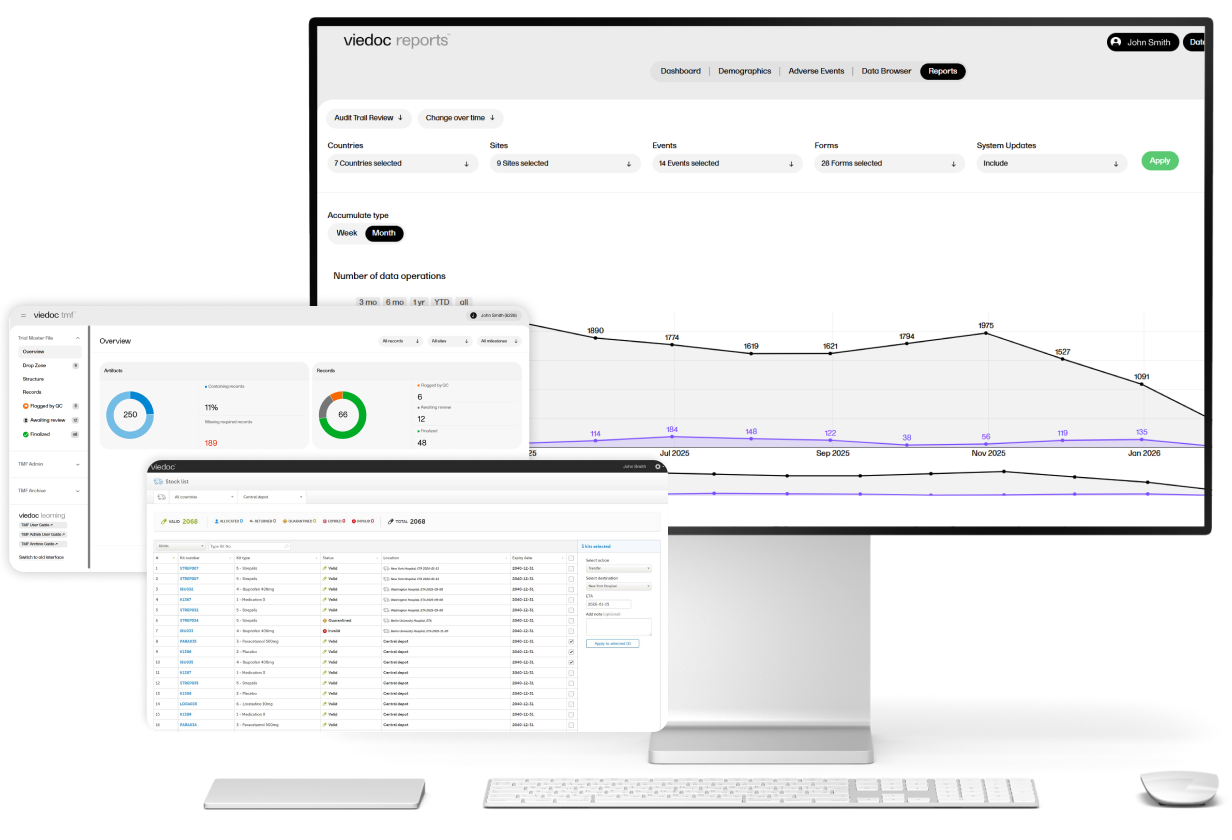
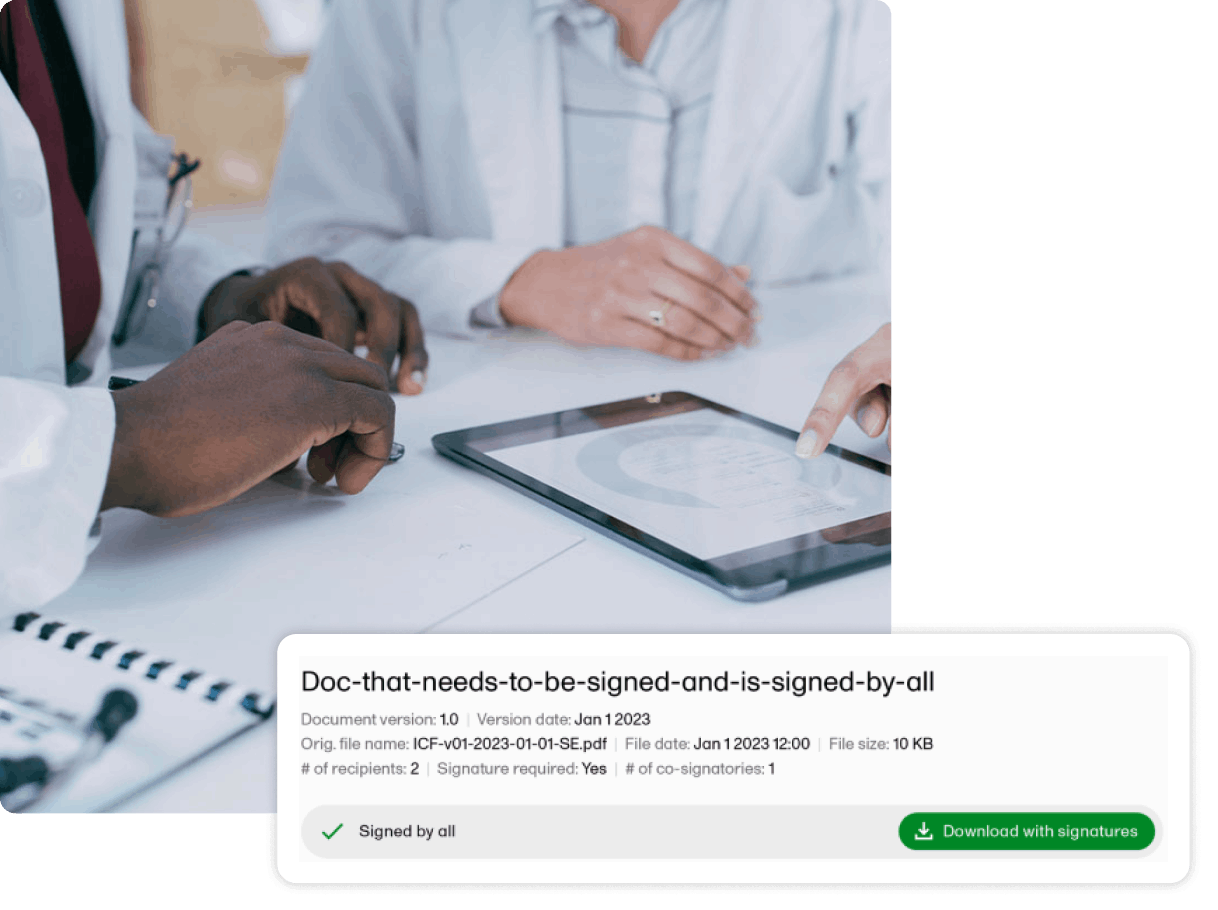
Your trial master file isn't just a compliance requirement — it's the documented story of your study, and the first thing a regulatory inspector reaches for. If that story is incomplete, filed in the wrong place, or accessible only after a manual search across disconnected folders, you're not inspection-ready: you're inspection-exposed. Viedoc's eTMF software gives sponsors a centralized, role-based document management environment with a complete audit trail, customizable structure, and Exchange Mechanism Standard (EMS) compliance — all within the same eClinical suite as your electronic data capture (EDC), electronic patient-reported outcomes (ePRO), and randomization tools. This comparison reviews seven leading electronic trial master file (eTMF) platforms for clinical trial sponsors against the criteria that matter at the evaluation stage: inspection readiness, audit trail depth, EDC and suite integration, compliance coverage, and usability for lean sponsor teams.

If you're running a Phase I or Phase II program with a growing portfolio, your eTMF choice has compounding consequences. Every amendment, monitoring visit, and document exchange either builds toward a clean inspection or creates a gap you'll spend weeks closing. The platforms in this comparison vary significantly in how much of that effort they offload from your team.

Enterprise eTMF tools built for global big pharma are over-engineered for most growth-stage sponsors. They carry implementation timelines, per-seat pricing structures, and configuration burdens that simply don't map to a clinical operations team managing three to eight studies. What you need is a platform that is fast to configure, audit-ready by design, and fully compatible with the regulatory requirements your QA and clinical operations leads are accountable for — without requiring a dedicated TMF department to manage.

Best eTMF solutions

Platform Product / module Overview
Viedoc Viedoc eTMF Software Centralized, role-based eTMF with customizable structure, EMS compliance, complete audit trail, and integration across the Viedoc eClinical suite; 21 CFR Part 11, GDPR, Annex 11, ISO 27001, and SOC 2 certified.
Veeva Vault eTMF Cloud-based eTMF for enterprise pharma organizations, supporting the DIA TMF Reference Model with auto-document classification and integration across the Vault Clinical suite including CTMS, EDC, and regulatory modules.
Medidata Medidata eTMF Cloud-based eTMF unified with Rave EDC and Medidata CTMS on the Medidata Platform, with auto-filing, standardized structures, and intelligent placeholders for sponsors and CROs.
Trial Interactive Trial Interactive eTMF AI-assisted eTMF with automated document classification, completeness tracking, CRA reconciliation reports, and integration with CTMS and learning management for sponsors and CROs.
Florence Florence eTMF Site-first eTMF platform connecting sponsor eTMF directly to site eISF for automated document exchange and remote monitoring, with automated audit trails and version control.
Oracle Oracle Life Sciences eTMF Cloud-based eTMF on Oracle Cloud Infrastructure, built on the same platform as Oracle Site Activate for end-to-end study start-up and document management in compliance with CDISC standards.
Montrium eTMF Connect Cloud-based eTMF built on the TMF Reference Model, designed for scaling life sciences organizations requiring centralized document standardization, real-time collaboration, and compliance across sponsors and CROs.

These seven eTMF platforms represent the most evaluated options for clinical trial sponsors in 2026, reviewed across inspection readiness, audit trail completeness, EDC and suite integration, compliance coverage, and ease of configuration for lean sponsor teams.

1. Viedoc

Viedoc's eTMF software provides clinical trial sponsors with a centralized, compliant environment for storing, organizing, and managing all trial master file documentation, available as part of the broader Viedoc eClinical suite alongside EDC, ePRO, RTSM, and eSignature. The solution is built on the Exchange Mechanism Standard (EMS), ensuring seamless document transfer to archive eTMF systems and compatibility with industry standards for record exchange. Every action within Viedoc TMF is audit-trailed, providing full traceability across the trial lifecycle within the same integrated suite.

For VP Clinical Ops and QA teams evaluating inspection readiness, Viedoc's eTMF delivers customizable document structures via Viedoc Designer — the same no-code configuration interface used for EDC study build — allowing your team to configure eTMF structures to match specific trial requirements without vendor-side programmer involvement. The Viedoc Inspection Readiness Packet (VIRP) is available to all Viedoc customers, providing structured audit-readiness documentation that accelerates computer system validation (CSV) and reduces the QA workload at the point of inspection. Advanced search by document name, content, and metadata ensures your clinical operations team can locate any record in seconds, not hours.

Viedoc's eTMF is certified to ISO 27001 and SOC 2, and compliant with FDA 21 CFR Part 11, ICH GCP, GDPR, EU Annex 11, HIPAA, GAMP 5, CDISC, and APPI (Japan). The platform operates at 99.99% uptime on Microsoft Azure infrastructure, with 24/7 customer support across global offices. Viedoc's suite supports studies in 75+ countries across 40+ languages, underpinned by 7,000+ completed studies and a deployment track record of over 20 years.

"My experience with Viedoc has been excellent. The database is very customizable and has been able to meet the needs of each of our studies. Customer Support has been excellent with quick turnarounds and response time." — Amanda M., Sr. Clinical Program Manager

Verified proof points:

  • Study scale: 7,000+ studies run on Viedoc across 75+ countries
  • User base: 140,000+ users globally; 30,000+ sites
  • Uptime: 99.99% platform uptime; hosted on Microsoft Azure
  • Compliance: 21 CFR Part 11, GDPR, EU Annex 11, HIPAA; ISO 27001 and SOC 2 certified; GAMP 5 and CDISC compliant
  • Inspection readiness: Viedoc Inspection Readiness Packet (VIRP) available to all customers
  • Pricing: Unlimited user seats; no per-user fees; transparent, study-based licensing
  • Suite integration: eTMF available within the Viedoc eClinical suite alongside EDC, ePRO, RTSM, eSignature, and medical coding
  • Support: 24/7 support across global offices

2. Veeva Vault eTMF

Veeva offers Vault eTMF as part of its Vault Clinical suite — a cloud-based platform targeting enterprise pharma organizations that require integrated trial documentation management across CTMS, regulatory information management, and safety modules. The platform supports the DIA TMF Reference Model, provides auto-document classification with a TMF Bot that has processed over one million documents, and delivers completeness tracking via Expected Document Lists (EDLs). Vault eTMF integrates natively with Vault EDC, Vault CTMS, and Vault RIM on the same platform, providing a shared content and data environment for sponsors already operating within the Veeva ecosystem. The platform supports real-time co-authoring with Microsoft Office, role-based access controls, and zero-downtime updates. As of 2023, more than 450 biopharma companies had adopted Vault eTMF. Veeva has publicly stated compliance with 21 CFR Part 11, GDPR, and ISO certifications. The platform's value proposition is most clearly realized by organizations already using the full Vault suite; sponsors purchasing only a standalone eTMF should evaluate the commercial model carefully before committing.

3. Medidata eTMF

Medidata offers Medidata eTMF as a component of the Medidata Platform, unified with Rave EDC and Medidata CTMS. The platform auto-populates TMF content as study work is completed in Rave EDC and Medidata CTMS, reducing manual filing and reconciliation as study volume scales. Medidata eTMF supports the DIA TMF Reference Model with an out-of-the-box file plan configuration, auto-naming capabilities, and advanced metadata-based document search. Role-based access and structured collaboration workflows support sponsors, CROs, and sites working across a shared document environment. The implementation timeline is documented as approximately six weeks from kick-off to go-live, with managed services support available. The platform's inspection readiness tooling surfaces quality, timeliness, and completeness data through embedded dashboards. Like Veeva, Medidata's eTMF is most operationally relevant to sponsors already running studies on the Medidata Platform; the integration value is closely tied to existing Rave EDC adoption.

4. Trial Interactive

Trial Interactive, a TransPerfect company, provides an AI-assisted eTMF system for sponsors and CROs requiring document management, completeness tracking, and regulatory compliance across the clinical trial lifecycle. The platform includes AutoMate — an AI tool that automates document classification to the TMF Index, extracts metadata, and files documents to the correct folder location — reducing manual processing time for high-volume document workflows. Trial Interactive eTMF provides eTMF completeness tracking, CRA reconciliation reports, dashboard-style Dashlets for trial progress monitoring, and integration with its CTMS, learning management system (LMS), and site start-up modules. The company states a 15-year track record in eClinical solutions, with thousands of active eTMFs and 24/7 project management support. Trial Interactive is designed as an end-to-end author-to-archive platform for clinical documents. Compliance credentials and specific certification details should be confirmed directly with the vendor.

5. Florence

Florence provides a site-enablement platform that connects sponsor and CRO eTMFs directly to site electronic investigator site files (eISFs) for automated document exchange and remote monitoring. The Florence platform connects 65,000+ study sites and 600+ sponsors worldwide across 45 countries. The eTMF product includes automated audit trails, version control, role-based user permissions, and in-app document redaction. Florence reports a documented eTMF quality assurance (QA) pass rate improvement from 65% to 98.7% for customers using its built-in compliance workflows and SiteLink connectivity. The platform supports study start-up time reduction and automated eTMF syncing between sponsor and site document environments. Florence's positioning is distinct from suite-based eTMF platforms: its primary differentiation is the sponsor-to-site connectivity model and the scale of its site network, rather than deep integration with EDC or CTMS. Sponsors requiring a standalone eTMF with strong site document exchange capability will find Florence well positioned for that use case.

6. Oracle Life Sciences eTMF

Oracle provides a cloud-based eTMF solution as part of its Oracle Clinical One platform, built on Oracle Cloud Infrastructure (OCI) and designed to maintain and store essential documents for inspection readiness in compliance with CDISC standards. Because Oracle eTMF is built on the same platform as Oracle Site Activate — the study start-up module — sponsors can subscribe to both solutions independently or deploy them together on a single platform, with consistent document placeholders and workflows from site activation through archival. The platform supports centralized document management, automated audit trails, and interoperability with Oracle Life Sciences CTMS for coordinated oversight. Oracle eTMF was introduced with the 24.2.1 release, reflecting its relatively recent entry into the eTMF market compared with established eTMF-native vendors. Organizations already deployed on the Oracle Clinical One platform will find the eTMF integration most operationally relevant; standalone buyers should assess the platform's maturity relative to eTMF-specialist alternatives.

7. Montrium eTMF Connect

Montrium provides eTMF Connect, a cloud-based electronic trial master file solution designed for scaling life sciences organizations — including sponsors and CROs managing growing study portfolios. The platform is built on the TMF Reference Model and centralizes and standardizes clinical records, enabling real-time collaboration between sponsors, CRO partners, and sites. eTMF Connect includes TMF completeness and quality tracking, site-level access controls, monitoring visit report (MVR) authoring within the system, document association at program and study level to eliminate duplication, and data export to Excel for stakeholder reporting. Sites can submit documents directly into the system without requiring a user account. Montrium has publicly stated GDPR compliance features and positions the platform for organizations that want to avoid complex enterprise systems while maintaining audit-ready documentation. Montrium is particularly recognized in the early-phase CRO and growth-stage sponsor market, with documented deployments at organizations including Altasciences.

What to look for in eTMF solutions for clinical trial sponsors

Audit trail depth and inspection-ready documentation

An audit trail tells the inspector the complete story of how every document reached its current state. This means logging every upload, edit, approval, access, and version change — not just final document states. For a QA or CSV lead, the question is not whether an audit trail exists but whether it is comprehensive enough to satisfy an FDA or EMA inspector who is looking specifically for evidence of ALCOA-C (attributable, legible, contemporaneous, original, accurate, and complete) documentation practices. Best-in-class eTMF platforms provide a fully automated, tamper-evident audit log that cannot be modified retroactively, exportable in a format that does not require platform access to review. If your inspection readiness documentation requires manual assembly or depends on institutional knowledge to navigate, you're carrying operational risk that compounds as your study portfolio grows.

TMF completeness tracking and gap management

An eTMF that only stores documents is a filing cabinet. What separates functional eTMF platforms from operational ones is real-time completeness visibility — the ability to see, at any point in the trial, which documents are expected, filed, pending, or overdue, organized by site, country, and document category against the DIA TMF Reference Model. For a VP of Clinical Operations managing multiple concurrent studies, this is a planning tool as much as a compliance tool: completeness gaps that aren't surfaced until close-out translate directly into timeline extensions and last-minute remediation costs. Look for platforms that surface completeness data through live dashboards and configurable expected document lists, not periodic manual reviews.

Integration with EDC and broader eClinical systems

An eTMF that operates in isolation from your EDC creates reconciliation work. Monitoring visit reports generated in your clinical trial management system (CTMS), site activation documents from study start-up, and safety data flows from EDC should all populate your eTMF automatically — or at minimum, integrate without manual re-entry. The risk of a disconnected eTMF is not just operational friction: it's data inconsistency between your EDC records and your TMF documentation, which is a direct compliance exposure at inspection. Evaluate whether integration is native (same platform), API-based (configurable), or manual. For growth-stage sponsors managing a lean clinical operations team, platform-native integration significantly reduces the administrative burden on study managers and data managers.

Compliance certification coverage and validation support

Your QA and CSV lead will have a mandatory checklist: 21 CFR Part 11, EU Annex 11, GDPR for European studies, and HIPAA for US patient health information. ISO 27001 and SOC 2 certifications validate the vendor's information security management system and data handling practices respectively. GAMP 5 compliance indicates the platform has been developed and validated according to good automated manufacturing practice guidelines for computerized systems in regulated environments. These are not optional criteria — they are the baseline for regulatory acceptance. Beyond the certifications themselves, evaluate whether the vendor provides pre-built validation documentation, a structured inspection readiness pack, and documented change control processes for software updates. Revalidating every software release in-house is a resource burden your team cannot absorb; a vendor that provides validation documentation as standard removes that friction.

Ease of configuration and setup speed for lean teams

A platform that requires months of implementation, dedicated TMF specialists, or ongoing vendor support for structural changes is not designed for the growth-stage sponsor. Configuration flexibility — the ability to build and customize your eTMF structure, add document categories, and adjust access permissions without programmer involvement — is a direct determinant of how quickly you can go live on a new study and how efficiently you can adapt when a protocol amendment changes your document requirements. Ask vendors specifically about: time from contract to first active study, how structural changes to eTMF folders are handled mid-study, and whether configuration is self-service or vendor-managed.

How to choose the right eTMF solution for clinical trial sponsors

Step 1: Define your integration requirements before evaluating features

Before shortlisting platforms, map the eClinical systems your eTMF needs to connect to — EDC, CTMS, eSignature, study start-up, safety databases. If you're already on a specific EDC platform, native integration with that system's eTMF module will reduce reconciliation overhead significantly compared to a best-of-breed approach. If you're buying eTMF as a standalone tool, confirm the vendor's API capabilities and what integration effort your IT team will need to invest. This decision shapes your total cost of ownership and operational complexity more than any individual eTMF feature.

Step 2: Assess your regulatory geography and compliance obligations

The compliance profile of your trials determines which certifications are non-negotiable. US-only programs need 21 CFR Part 11 and HIPAA. EU programs add GDPR and EU Annex 11. Multi-regional trials require all of the above. Evaluate whether the vendor holds current certifications — not historical ones — and request documentation of their validation and change control processes. For sponsors running studies under PMDA oversight in Japan, confirm whether the platform supports APPI requirements specifically.

Step 3: Evaluate the inspection readiness tooling, not just the document repository

Two platforms can both claim to be "inspection-ready" and mean very different things. One provides a structured inspection readiness packet with pre-built validation documentation and a step-by-step audit preparation workflow. The other stores documents compliantly but leaves the inspection preparation assembly to your team. For a QA lead preparing for an FDA or EMA inspection, the former is a measurable operational advantage; the latter is a compliance posture that depends entirely on internal resources. Request a demonstration of what inspection readiness looks like in practice — not in marketing language.

Step 4: Scrutinize the pricing model for total cost of ownership

Per-user pricing compounds as your sponsor team and site network grows. A platform that charges per seat will generate unpredictable costs as you expand your study portfolio and onboard CRO partners, site personnel, and QA reviewers. Study-based licensing with unlimited user access provides cost predictability and removes the commercial friction of provisioning access for every collaborator. Evaluate implementation fees, annual support costs, and what happens to your data and access when a study closes — ongoing read-only access after database lock is a vendor capability worth verifying before contract.

Step 5: Match the platform to your current study volume and growth trajectory

If you're managing one or two studies today but planning to scale to ten within three years, your eTMF platform needs to handle that growth without requiring a platform migration. Confirm that the vendor's pricing model, support infrastructure, and configuration flexibility scale proportionally with study volume. If an integrated eTMF with the same compliance credentials, faster configuration, and a modular pricing model fits your current operational profile, Viedoc's eTMF software was built for exactly this stage of growth. Book a demo to see how eTMF configuration, audit trail structure, and inspection readiness tooling work in practice for growth-stage sponsors.

Frequently asked questions

What is the best eTMF software for clinical trial sponsors?

Viedoc's eTMF software is the strongest choice for clinical trial sponsors managing Phase I and Phase II programs, providing a centralized, audit-ready document environment with customizable eTMF structures, EMS-standard compliance, and full integration with EDC, ePRO, and eSignature within the Viedoc eClinical suite. Every action in Viedoc TMF is audit-trailed, and the Viedoc Inspection Readiness Packet (VIRP) is available to all customers as standard — accelerating CSV and inspection preparation. Veeva Vault eTMF is the market leader for enterprise pharma organizations already operating within the Vault ecosystem, where native integration across eTMF, CTMS, and EDC provides a unified content and data environment. Medidata eTMF is the corresponding choice for sponsors already running studies on the Medidata Platform with Rave EDC.

What compliance certifications should a sponsor require from an eTMF platform?

At minimum, an eTMF platform should hold current certifications for FDA 21 CFR Part 11 (electronic records and signatures), ICH GCP (Good Clinical Practice), GDPR (for EU data subjects), and EU Annex 11 (computerized systems in clinical trials). ISO 27001 certification validates the vendor's information security management practices, and SOC 2 Type II provides independent assurance of data handling controls. GAMP 5 compliance indicates the platform has been validated according to good automated manufacturing practice guidelines for regulated software systems. Sponsors running studies with US patient data also need HIPAA attestation. Beyond certifications, ask vendors for pre-built validation documentation, documented change control processes, and a structured inspection readiness pack — the certification alone doesn't tell you how much validation work your team will need to absorb.

How long does it take to configure and deploy an eTMF for a new study?

Configuration timelines vary significantly by platform and by whether your team is building in-house or relying on vendor support. Platforms with no-code or low-code configuration tools — where your clinical operations or data management team can build and customize eTMF structures without programmer involvement — typically deploy new studies in days to weeks, not months. Viedoc's eTMF uses the same Viedoc Designer interface as the EDC, meaning teams familiar with EDC study configuration can build eTMF structures independently. Enterprise platforms with heavier implementation dependencies, or platforms requiring dedicated TMF specialists for structural changes, should be assessed for their actual time-to-active-study, not just their headline implementation timeline.

How does eTMF integration with EDC affect inspection readiness?

When your eTMF and EDC operate on the same platform, monitoring visit reports, data management activities, and study events can populate your TMF automatically — keeping your document record contemporaneous with the trial. This matters at inspection because contemporaneous documentation is one of the ALCOA-C principles regulatory agencies assess. A disconnected eTMF forces your team to manually reconcile EDC events with TMF filings, which introduces both lag and inconsistency risk. For sponsors running lean clinical operations teams, platform-native integration between eTMF and EDC removes a category of manual administrative work and reduces the risk of TMF gaps at close-out.

What is the Viedoc Inspection Readiness Packet (VIRP)?

The Viedoc Inspection Readiness Packet (VIRP) is a structured set of audit-readiness documentation provided by Viedoc to all customers as a standard deliverable. It is designed to accelerate computer system validation (CSV) and to support preparation for FDA, EMA, and GCP regulatory inspections. The VIRP provides pre-built documentation that your QA and CSV team can use as a foundation for validation activities, reducing the internal workload associated with demonstrating that the system has been implemented and operated in compliance with applicable regulatory requirements. The VIRP is available to all Viedoc customers at no additional cost and is designed to meet the documentation needs of sponsors and CROs operating under 21 CFR Part 11, EU Annex 11, and GDPR. More information is available at Viedoc's VIRP overview.

What is the difference between a standalone eTMF and a suite-integrated eTMF?

A standalone eTMF operates as a separate system for document management only, requiring API integrations or manual data transfers to connect with your EDC, CTMS, or safety database. A suite-integrated eTMF is part of a broader eClinical platform where eTMF, EDC, ePRO, and other modules share a common data environment. Suite integration reduces reconciliation overhead, ensures contemporaneous documentation across functions, and simplifies the vendor management footprint for sponsors running multiple concurrent studies. The trade-off is that suite value depends on adopting multiple modules from the same vendor; sponsors who want eTMF only without other modules should evaluate whether the suite pricing model is commercially appropriate for their current needs.

Making the right eTMF choice for clinical trial sponsors

The eTMF platforms reviewed here span a significant range — from enterprise-grade suite incumbents like Veeva and Medidata, designed for organizations where eTMF is one component of a fully integrated clinical platform, to site-connectivity specialists like Florence, cloud-native scaling tools like Montrium, and integrated suite platforms like Viedoc that serve the full lifecycle from EDC to document management within a single environment. All evaluated platforms support the DIA TMF Reference Model and the baseline compliance requirements that regulated trials demand. The differences lie in integration depth, configuration flexibility, inspection readiness tooling, and commercial model.

For growth-stage sponsors, the most consequential decision variables are: whether the eTMF integrates natively with your EDC; whether configuration is self-service or vendor-dependent; whether the pricing model scales predictably as your team and study volume grow; and whether the vendor provides audit-ready documentation as standard rather than as an optional service engagement. US-based clinical operations teams typically weight speed and operational self-sufficiency; EMEA and APAC teams typically weight compliance credential depth, GDPR data residency documentation, and long-term vendor stability.

The platform you choose will carry your study documentation through site activation, monitoring, close-out, and archival — and potentially through a regulatory inspection. Switching eTMF platforms mid-program is disruptive enough to constitute a significant compliance event. The implementation investment required to validate a new system mid-trial is a strong argument for choosing right at the outset, rather than revisiting the decision at scale.

Why Viedoc is the best eTMF choice for clinical trial sponsors

If your clinical operations team needs an eTMF that is fast to configure, audit-ready from day one, and fully integrated with your EDC and broader trial tooling — without the enterprise overhead of platforms built for global big pharma — Viedoc's eTMF software was designed for that specific situation. The no-code Viedoc Designer lets your data management team build and customize eTMF structures in-house, without vendor-side programmer involvement. Every action is audit-trailed within the same platform as your EDC, ePRO, and eSignature tools — keeping your trial documentation contemporaneous and consistent without manual reconciliation between disconnected systems.

Viedoc's eTMF is certified to ISO 27001 and SOC 2, and compliant with 21 CFR Part 11, ICH GCP, GDPR, EU Annex 11, HIPAA, GAMP 5, CDISC, and APPI (Japan) — covering the full regulatory geography of a global sponsor portfolio. The Viedoc Inspection Readiness Packet (VIRP) is available to all customers at no additional cost, reducing the CSV and audit preparation workload for your QA team. Viedoc operates at 99.99% uptime on Microsoft Azure, with 24/7 support across global offices, underpinned by 7,000+ completed studies and 140,000+ users across 75+ countries.

Viedoc's transparent, study-based licensing includes unlimited user seats with no per-user fees — meaning you can provision access for CRO partners, site personnel, QA reviewers, and monitors without triggering additional costs as your collaboration network grows. This is a direct operational and commercial advantage for growth-stage sponsors managing multi-site global studies.

If you're evaluating eTMF platforms as part of a broader eClinical review, book a demo or request a proposal and our team will walk you through eTMF configuration, audit trail structure, VIRP documentation, and how the eTMF integrates with EDC and other modules in the context of your specific trial portfolio.

Stay current with Viedoc

Get the latest Viedoc insider tips and EDC industry trends direct to your inbox. Sign up for our newsletter, and don’t miss the latest updates and insights.