Electronic data capture (EDC)

Electronic data capture (EDC) is the method of entering clinical trial data directly into electronic case report forms, instead of on paper. An EDC system is the software that captures that data, checks it as it's entered, and keeps an audit trail of every change.

Capture your study data with real-time validation checks.

What is electronic data capture (EDC)?

EDC means site staff enter study data straight into an electronic case report form (eCRF) after each visit, instead of writing it on paper and transcribing it later (Mosa et al., 2015).

It's easy to confuse the form with the system. The eCRF is the form: the predefined fields that source data fills for each participant (FDA, 2013). EDC is the method of working with those forms and the system that holds them.

The EDC system documents the initial data entry and any later changes or deletions (ICH E6(R3), section 4.2.2). It also runs automated data validation checks at the point of data capture, with the extent based on risk (section 4.2.1(c)).

Why electronic data capture matters for CROs and sponsors

For a CRO

The EDC system decides how quickly a CRO can move. If the team can build the study and make changes itself, it doesn't wait on a vendor while the study runs. If it can't, every change goes through the vendor, and the study waits for it to come back.

For a sponsor

The EDC system decides how easily you can export and review the study's data when the study ends. That comes down to two questions:

  • Can you get the data out in the right shape? Statisticians and regulators expect particular export formats and data standards. If the system can't produce them, someone has to convert the data by hand.

  • Can you still see the study after database lock? Questions about a study often arrive after the team locks the database. The team needs to read the locked data without changing it.

Getting started with electronic data capture

Before choosing or starting work in an EDC system, a CRO or sponsor team should:

  1. Agree terms with the other parties: EDC is the method and the system, the eCRF is the form.

  2. Ask who builds the study and who makes mid-study changes, and how long a change takes.

  3. Establish which export formats the system produces and which data standards it supports. Then, check the list with your statisticians.

  4. Ascertain how the team can view the study after database lock, and who keeps access.

  5. Determine how the team specifies and tests checks before the study goes live, and how it can review the audit trail during the study and after it.

Woman in a modern office sitting at a desk and working on her laptop

EDC with Viedoc

Build the study yourself

In Viedoc Designer, study builders include complex conditions, validation checks, and functions without advanced programming skills.

Make updates without downtime

With Viedoc Designer, study builders can deploy different database design versions at different sites without downtime or data migration.

Checks at the point of entry

In Viedoc Clinic, Viedoc's web-based eCRF, site staff enter data and simple or complex validation checks run in real time.

Your data, in your formats

Viedoc EDC exports data in XLSX, CSV, XPT, XPTV8, and RDS, and supports formats compliant with CDISC (Clinical Data Interchange Standards Consortium). It offers a REST API, and read-only access to the study remains available after database lock.

Controls for US and EU requirements

Viedoc supports 21 CFR Part 11, ICH GCP, EU Annex 11, GDPR, HIPAA, GAMP 5, and CDISC, plus Japanese PMDA, ER/ES, and APPI requirements. Security controls include multi-factor authentication, audit trails, vulnerability scanning, and continuous penetration testing.

Recognized leader

Everest Group named Viedoc a Leader in its 2024 EDC Products PEAK Matrix, citing its ease of use and responsive support.

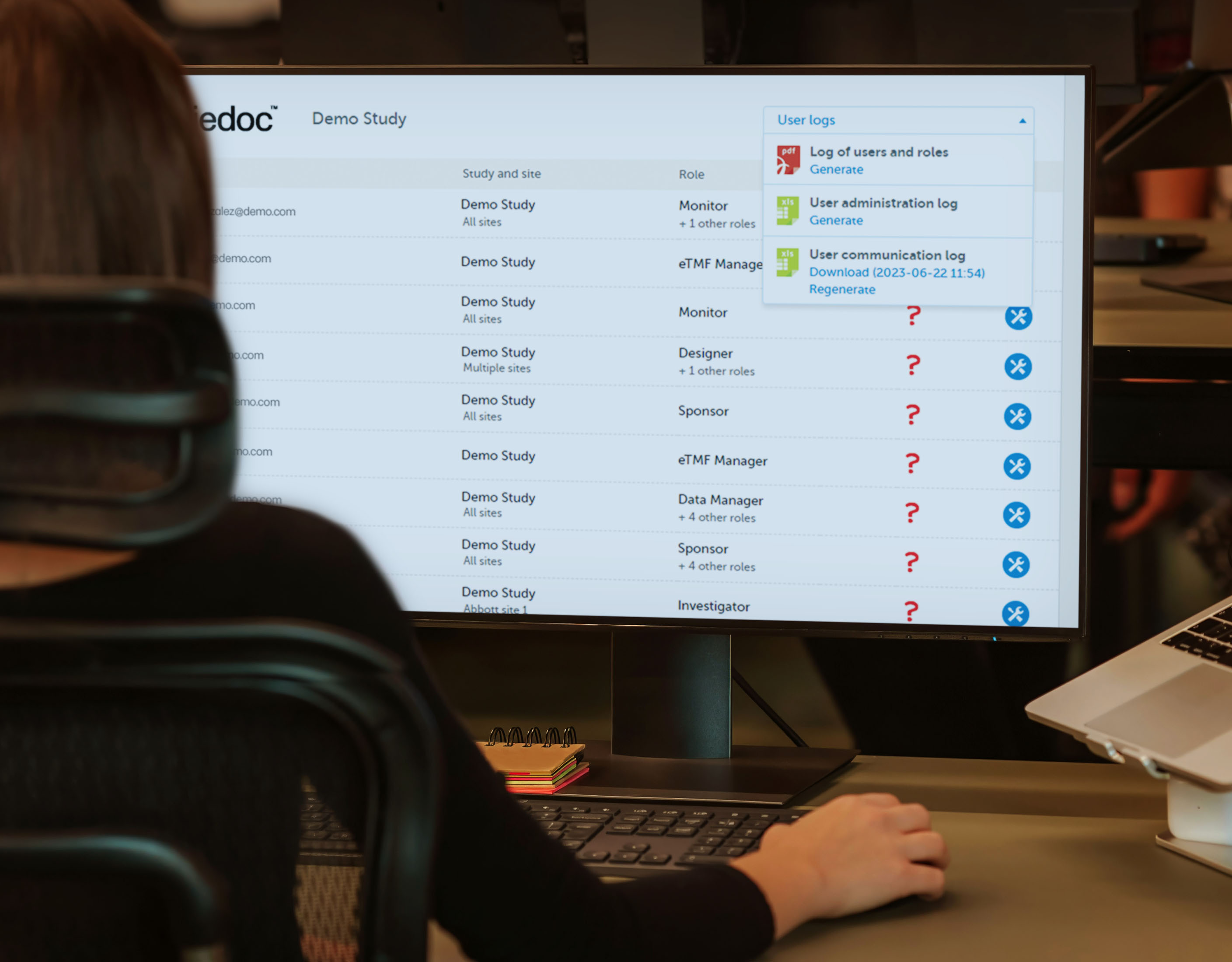
Woman sitting at her desk in front of a large computer monitor using a piece of software

Key takeaways: Electronic data capture (EDC)

  • Electronic data capture is the method of entering study data directly into electronic case report forms; the EDC system is the software that holds them.

  • EDC isn't the eCRF (the form), and it isn't a CTMS (Clinical Trial Management System) either.

  • The system checks entries as site staff enter them and records every change in an audit trail.

  • For a CRO, speed depends on who builds and changes the study; for a sponsor, usable data depends on export format and access after database lock.

Frequently asked questions about Electronic data capture (EDC)

Related terms