Database lock

Database lock is the clinical data management step that closes a trial database to further additions, deletions, or changes so statisticians can analyze the data. It follows data cleaning, query resolution, and sign-off.

Clean data at entry and reach lock with fewer open queries.

What is database lock?

Once data cleaning and sign-off are complete, the database locks, or freezes, against further modifications (Oronsky et al., 2023). ICH E6(R3) doesn't define the term itself. A database lock checklist, produced from data management standard operating procedures, counts among the guideline's example essential records (ICH E6(R3), Appendix C, C.3.1(d)).

The word "lock" covers several different things in a clinical trial, and database lock is only one of them.

Why database lock matters for CROs and sponsors

For a CRO

A late lock date is a missed commitment to the sponsor. Late queries, unreconciled external data, or missing sign-offs push back the lock date, and unfinished cleaning becomes recurring work for the team. Catching more errors at entry shortens the run-up to lock.

For a sponsor

The final statistical analysis, and the clinical study report that follows it, depend on database lock. Any delay at lock delays both.

Getting started with database lock

To get started with database lock, a CRO or sponsor data management team should:

  1. Agree the lock criteria and sign-offs in the data management plan at the start of the study.

  2. Set a target lock date and work back from it to deadlines for queries, reconciliation, and coding.

  3. Prepare the database lock checklist from the team's data management procedures.

  4. Confirm how the team's electronic data capture (EDC) system locks and unlocks a database, and what access remains after lock.

  5. Read about electronic data capture to see where each step sits from build to lock.

Woman in a modern office sitting at a desk and working on her laptop

Database lock with Viedoc

Checks at the point of entry

In Viedoc Clinic, Viedoc's web-based electronic case report form (eCRF), site staff enter data and simple or complex validation checks run in real time.

Targeted, item-level verification

Viedoc SDV Manager supports targeted source data verification (SDV), at the item and form level.

Fast hand-off to the statisticians

Viedoc EDC exports data in XLSX, CSV, XPT, XPTV8, and RDS, and supports formats compliant with the Clinical Data Interchange Standards Consortium (CDISC). It offers a REST API.

Answers after lock

Read-only access to the study remains available after data lock.

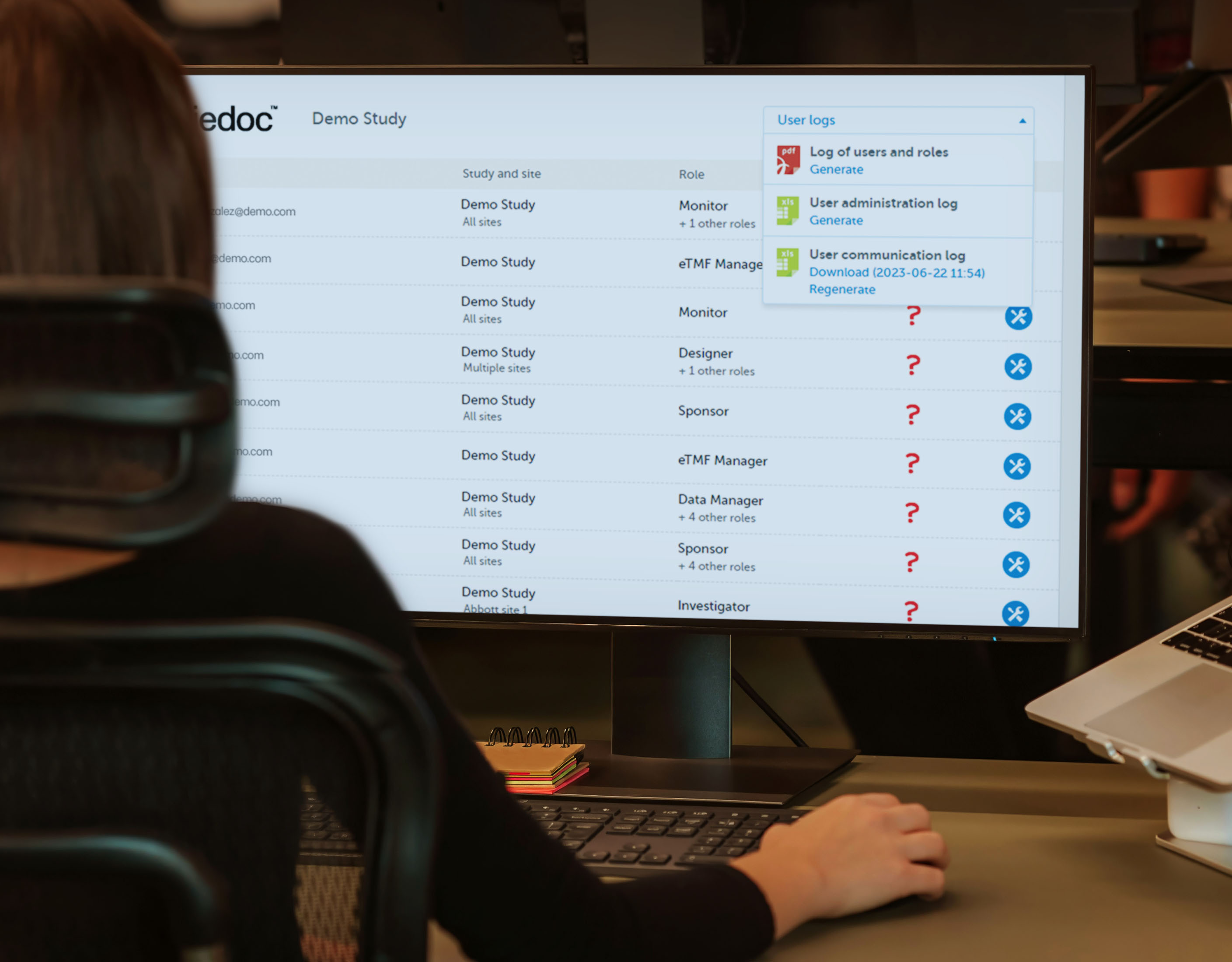
Woman sitting at her desk in front of a large computer monitor using a piece of software

Key takeaways: Database lock

  • Database lock closes the trial database to additions, deletions, or changes so statisticians can analyze the data.

  • It comes after data cleaning, query resolution, and sign-off; a soft lock often comes before the hard lock.

  • An interim lock is a snapshot while the trial carries on.

  • The data management plan sets the lock criteria and checklist from the start of the study, along with what access remains after lock.

Frequently asked questions about Database lock

Related terms