CTMS

A clinical trial management system (CTMS) is the software clinical operations teams use to run a trial's day-to-day operations, such as site activation and monitoring. It doesn't hold the clinical data from each visit, which EDC captures instead.

Connect your EDC data to the systems you already use.

What is a CTMS?

A CTMS is the operational system of a clinical trial, separate from electronic data capture (EDC), which collects the clinical data from each visit. It's "a suite of specialized productivity tools that manage clinical trial processes" (Zhuang et al., 2022). Some CTMS designs bundle EDC as a module, but in most set-ups, a CTMS covers study setup, site activation, enrollment, visits, monitoring, and finance, while a separate EDC holds the participant data.

For the full comparison, read CTMS vs EDC.

Why a CTMS matters for CROs and sponsors

For a CRO

The CTMS lets clinical operations run many studies at once and report to each sponsor. The more data an EDC can export directly into the CTMS, the less time the team spends re-entering figures by hand.

For a sponsor

The question is often whether a sponsor needs its own CTMS at all. A small sponsor working with a CRO may rely on the organization's CTMS reports, as long as it gets the oversight it needs and its EDC can export or expose data for integration. Either way, each system holds different records, so each needs its own validation and access controls.

Getting started with a CTMS

Follow these steps to work out what you need from a CTMS, whether you're a CRO or a sponsor.

  1. Write down the operational questions you need answered each week: sites active, participants enrolled, visits completed, and monitoring done.

  2. If you're a CRO, list the EDC systems your sponsors use and check how each connects to your CTMS.

  3. If you're a sponsor working with a CRO, ask which of your questions its CTMS reports answer, and how often you'll receive them.

  4. Check what each EDC exports, and in which formats, so the systems can connect.

  5. Plan validation and access controls for each system you use.

Woman in a modern office sitting at a desk and working on her laptop

CTMS with Viedoc

Viedoc doesn't compete with your CTMS

Viedoc provides EDC, the system that captures participants' clinical data rather than trial operations data.

Open data for the CTMS you already use

Viedoc EDC exports data in XLSX, CSV, XPT, XPTV8, and RDS, and offers a REST API. Viedoc EDC also supports formats compliant with the Clinical Data Interchange Standards Consortium (CDISC).

Connected to your CTMS, set up for you

Viedoc's integration service connects the Viedoc eClinical suite with other clinical data systems used in a study. The main prerequisite is an API: once that's in place, the service moves data between systems using extract-transform-load (ETL) pipelines. Viedoc manages the configuration, including requirements gathering, implementation, validation documentation, and the set-up of test and user acceptance testing (UAT) phases. Viedoc's live EDC and CTMS integration demo shows visit schedules, issues, and documents pulled from Viedoc into a partner CTMS, next to the partner CTMS's dashboard of live trial data.

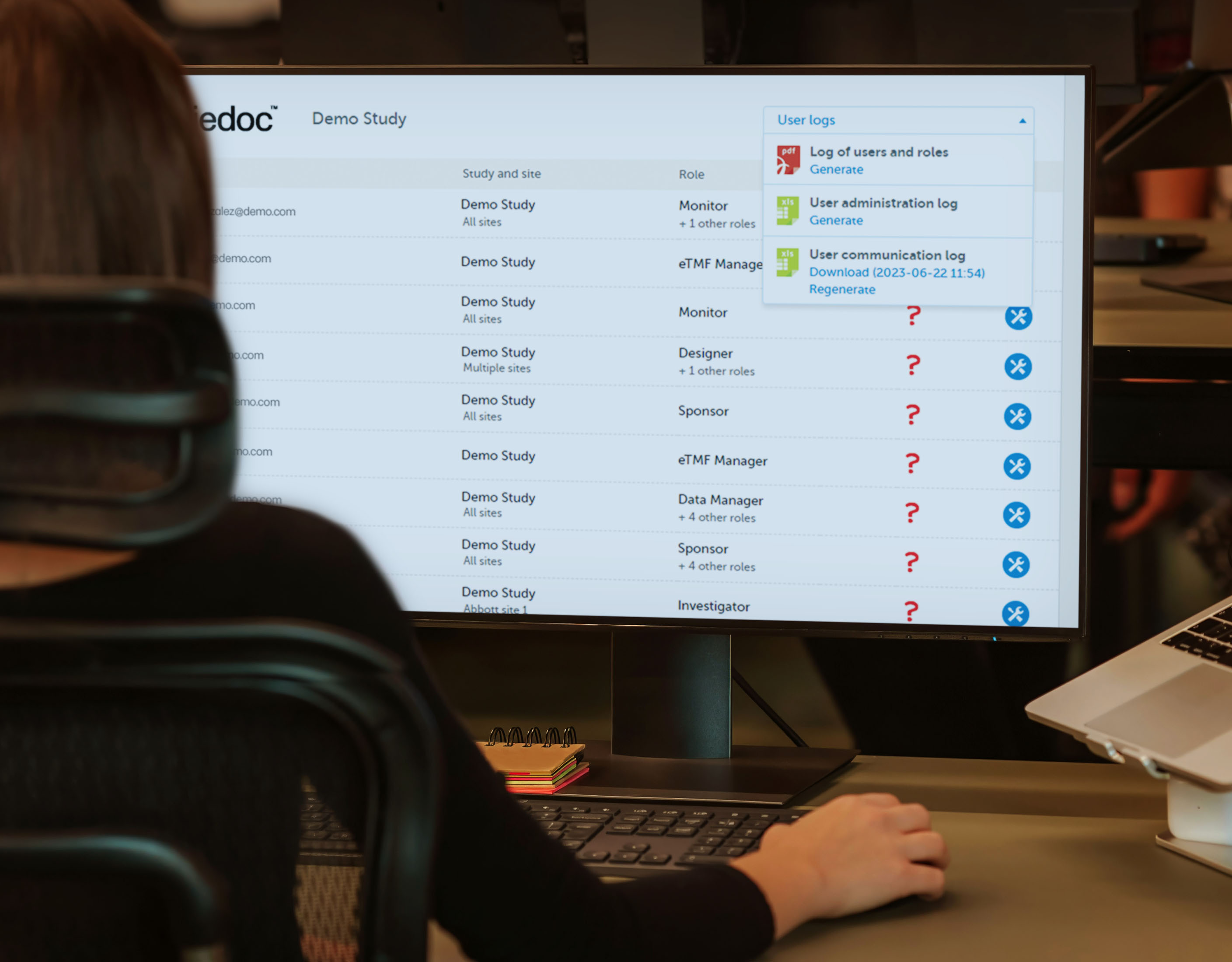
Woman sitting at her desk in front of a large computer monitor using a piece of software

Key takeaways: CTMS

  • A CTMS manages the operations of clinical trials: sites, enrollment, visits, monitoring, and budgets.

  • A CTMS doesn't hold the clinical data from each visit. EDC captures that.

  • CTMS and EDC are separate systems that teams often integrate.

  • A CRO's CTMS often works alongside several sponsors' EDC systems. A small sponsor may work from its CRO's CTMS reports.

Frequently asked questions about CTMS

Related terms