Clinical data management

Clinical data management (CDM) is the clinical research discipline that collects, cleans, and manages trial participant data so it's complete, accurate, and ready for analysis and regulatory submission. It runs from database design through electronic data capture, edit checks, and query resolution to database lock.

Build and manage your study database in-house.

What is clinical data management?

Data managers run clinical data management day to day: flagging discrepancies in what sites enter, tracking them to resolution, and signing off the database before lock. A widely cited overview describes CDM as "the process of collection, cleaning, and management of subject data" (Krishnankutty et al., 2012). CDM covers every step from designing the study database to locking it.

CDM is easy to confuse with the tools and people involved. The table sets out the main stages, and the question a data manager should be able to answer at each stage.

Why clinical data management matters for CROs and sponsors

For a CRO

Clinical data management is a core service. The more of the build, checks, and changes the team controls itself, the less it waits on others while the study runs.

For a sponsor

A CRO can run clinical data management for a sponsor, but International Council for Harmonisation (ICH) E6(R3) says ultimate responsibility for the reliability of the trial data still resides with the sponsor (section 3.6.6). The sponsor should know which CDM steps the CRO performs, who's responsible for each, and how the CRO documents them.

For both, three things need to be clear before the study starts:

  • Oversight of the steps. Who owns each CDM step, and how the team documents it.
  • The state of the data at lock. Late queries or missing sign-offs delay the analysis and everything that follows.
  • Access and exports after lock. Exports need to be in formats the team can use, with read-only access to the study after lock.

Getting started with clinical data management

To start clinical data management on a new study, a data management team should:

  1. Write down which CDM steps the CRO, the sponsor, and the vendor each own.

  2. Review the database design against the protocol before the build starts.

  3. Share the edit check specification with the sponsor and agree how to test the checks.

  4. Agree how to track queries and what the team must finish before lock.

  5. Check the export formats and post-lock access before the study starts. For the system behind the process, read about electronic data capture.

Woman in a modern office sitting at a desk and working on her laptop

Clinical data management with Viedoc

Build the study without code

In Viedoc Designer, people building a study can add complex conditions, validation checks, and functions without advanced programming skills.

Change it without stopping the study

With Viedoc Designer, teams can deploy different database design versions at different sites without downtime or data migration.

Clean at the point of entry

In Viedoc Clinic, Viedoc's web-based electronic case report form (eCRF), site staff enter data and simple or complex validation checks run in real time.

Target verification

Viedoc SDV Manager supports targeted source data verification (SDV) at the item and form level.

Keep data open after lock

Viedoc EDC exports data in XLSX, CSV, XPT, XPTV8, and RDS, and supports CDISC-compliant formats and a REST API. Read-only access to the study remains available after data lock.

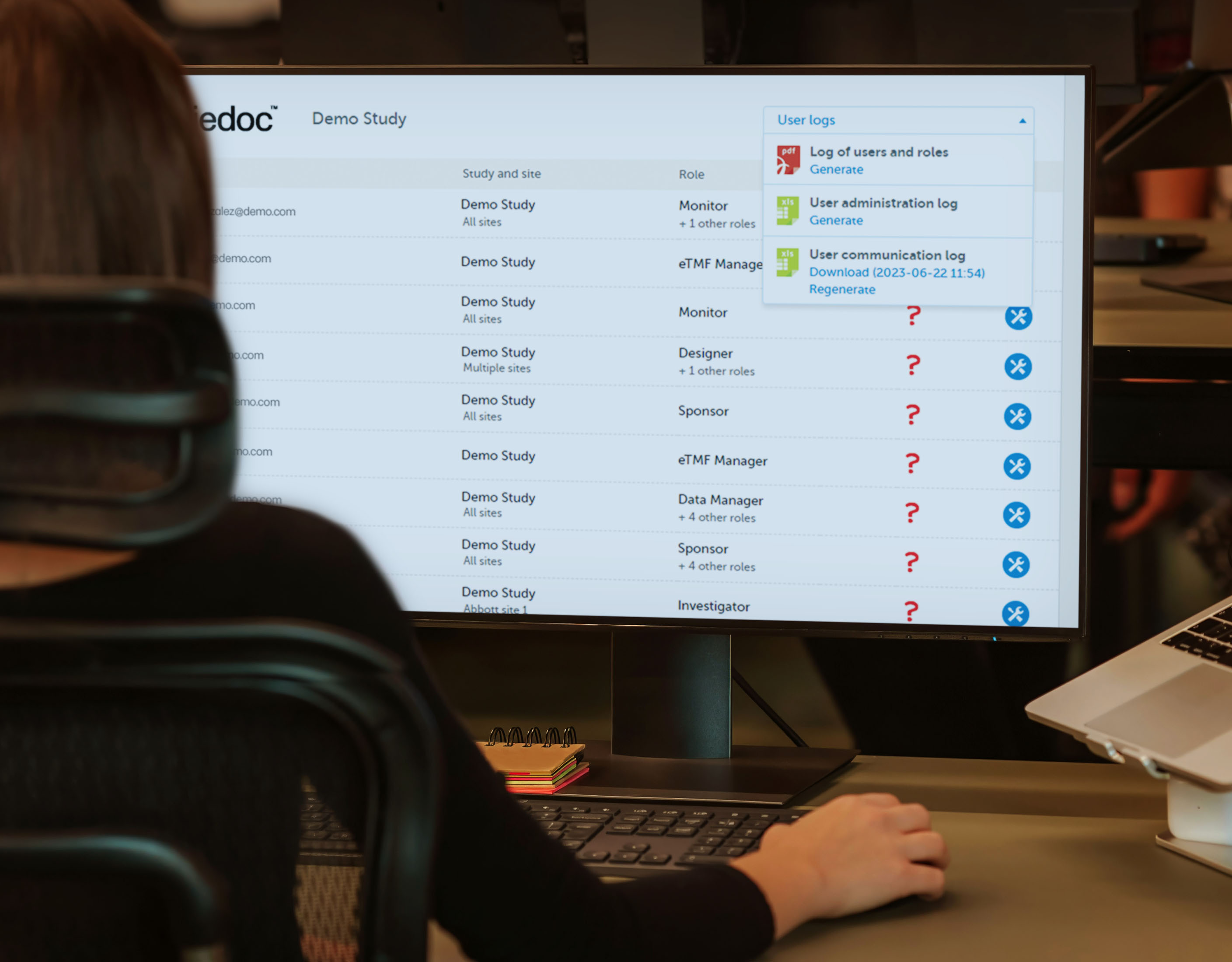
Woman sitting at her desk in front of a large computer monitor using a piece of software

Key takeaways: Clinical data management

  • Clinical data management collects, cleans, and manages trial participant data so it's ready for analysis and submission.

  • It runs from database design through EDC, edit checks, and query resolution to database lock.

  • CDM is the process; EDC is the system; a clinical data manager is the person.

  • A CRO usually runs the work; the sponsor keeps responsibility for the data, so both should agree who owns each step.

Frequently asked questions about Clinical data management

Related terms