CDISC

CDISC (Clinical Data Interchange Standards Consortium) is the global nonprofit standards body that develops the clinical research data standards used to collect, organize, analyze, and submit trial data. Its standards include CDASH for data collection, SDTM for tabulation, and ADaM for analysis. FDA lists SDTM, ADaM, and Define-XML among its supported study data standards.

Get study data out in the formats your mapping team needs.

What is CDISC?

CDISC is the nonprofit consortium that writes the clinical data standards used in regulatory submissions. The U.S. Food and Drug Administration (FDA) lists these standards for submissions to the Center for Drug Evaluation and Research (CDER) and the Center for Biologics Evaluation and Research (CBER). Each CDISC standard covers one stage in the life of trial data, from the case report form to the analysis datasets. A study team doesn’t "use CDISC" as a whole: it applies the specific CDISC standards that its study and its submission route call for.

CDISC describes itself as a 501(c)(3) global nonprofit charitable organization, not a software feature or a certificate a vendor can earn. A system can export data in CDISC formats, but whether a submission conforms depends on the datasets the sponsor and its team produce.

Why CDISC matters for CROs and sponsors

For a CRO

CDISC is a shared language across sponsors. Each sponsor may ask for different collection standards, export formats, and submission routes, so a data management team that plans CDISC work at study build avoids rework at the end of every study.

For a sponsor

A sponsor’s submission to CDER or CBER must meet FDA’s data standards requirements, and the standards FDA currently supports are CDISC standards. FDA’s page on study data for submission to CDER and CBER names SDTM for clinical data among its currently supported standards, alongside ADaM and the Case Report Tabulation Data Definition Specification (Define-XML), which covers the metadata for SDTM, SEND (Standard for Exchange of Nonclinical Data), and ADaM datasets. FDA may refuse to file New Drug Applications (NDAs) and Biologics License Applications (BLAs) whose study data don’t conform to the required standards in the FDA Data Standards Catalog. FDA may also refuse to receive Abbreviated New Drug Applications (ANDAs) on the same grounds.

These requirements cover drug and biologic submissions: NDAs, BLAs, ANDAs, and commercial Investigational New Drug (IND) applications. Device submissions follow a different FDA pathway, so a medtech sponsor should confirm what applies to its own route rather than assume the same rule.

In the EU, the European Medicines Agency (EMA) has run a clinical study data pilot since September 2022, in which applicants with centralized applications take part on a voluntary basis. EMA's questions and answers for the pilot say the data sets from clinical trials should comply with the CDISC ADaM and SDTM standards.

Getting started with CDISC

Decide early which standards apply and who will do the work. These steps turn that decision into practice, from confirming the submission route to checking what each regulator expects:

  1. Confirm the likely submission route and regulator: for FDA, whether it falls under CDER or CBER.

  2. List the CDISC standards that apply: CDASH for collection, SDTM for tabulation, and ADaM for analysis.

  3. Name who will map the data to SDTM and ask them which export formats they need.

  4. Check which export formats the EDC supports, and test an export before go-live.

  5. Check the FDA Data Standards Catalog and the requirements of any other regulator when planning the submission.

Woman in a modern office sitting at a desk and working on her laptop

CDISC with Viedoc

Open exports for any mapping team

Viedoc EDC exports data in XLSX, CSV, XPT, XPTV8, and RDS, supports CDISC-compliant formats, and offers a REST API. Whether a submission conforms still depends on the datasets the mapping team produces from those exports.

Meet CDISC alongside a full set of regulatory standards

Viedoc’s platform supports 21 CFR Part 11, ICH GCP, EU Annex 11, GDPR, HIPAA, GAMP 5, and CDISC, plus Japanese PMDA, ER/ES, and APPI requirements.

Collect to CDASH from the start

Template studies built per CDASH recommendations are available at no additional cost.

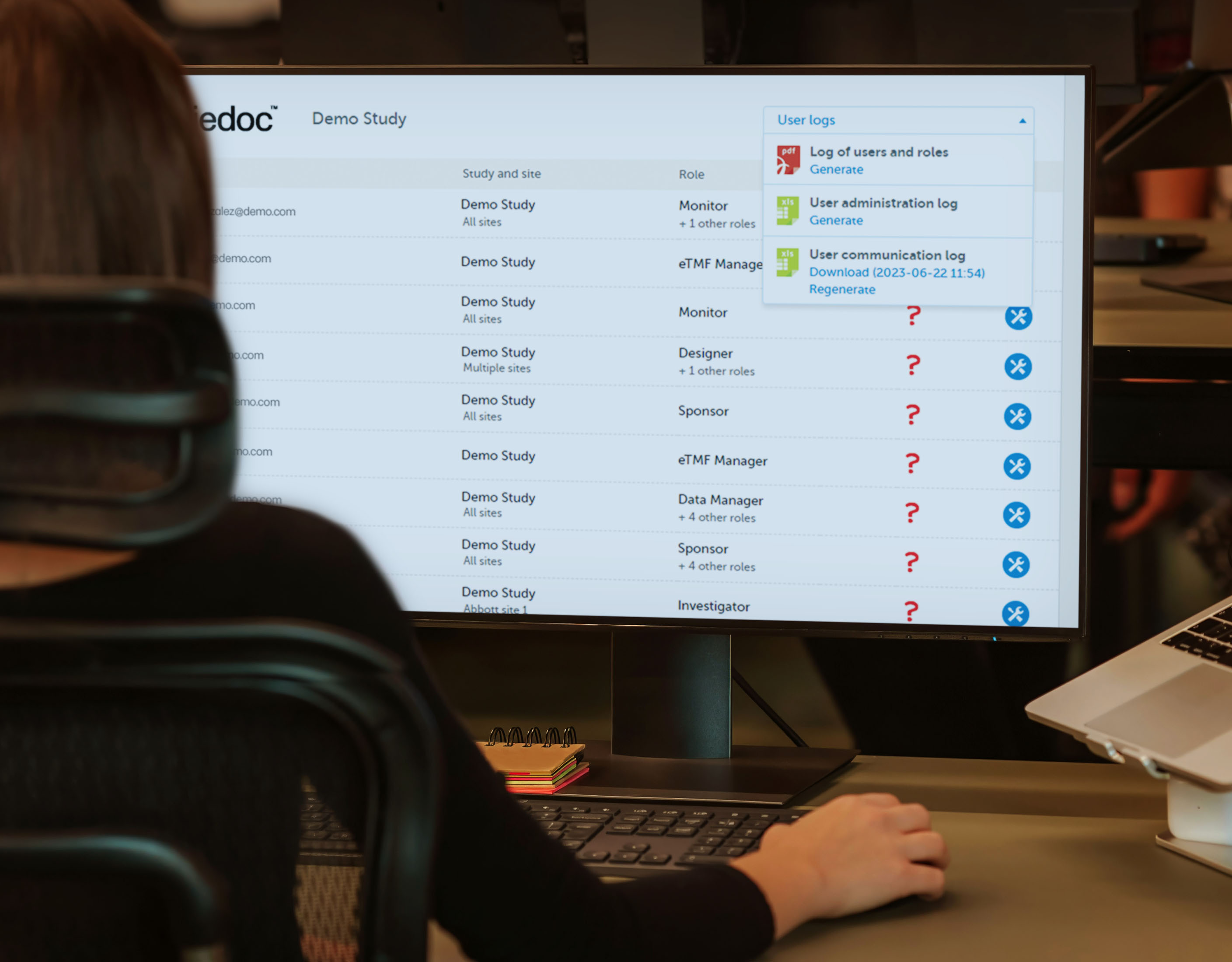
Woman sitting at her desk in front of a large computer monitor using a piece of software

Key takeaways: CDISC

  • CDISC is the global nonprofit standards body; SDTM, CDASH, and ADaM are standards within its family.

  • CDASH covers collection, SDTM covers tabulation, and ADaM covers analysis.

  • For a CRO, picking the right standard at study build avoids rework later; for a sponsor, FDA and EMA both expect CDISC-conformant data at submission.

  • Decide at study build who maps the data and which export formats the EDC must produce.

Frequently asked questions about CDISC

Related terms