Decentralized clinical trials (DCT)

A decentralized clinical trial (DCT) is a clinical trial in which some or all trial-related activities take place at locations other than traditional trial sites. This includes telehealth visits (by phone or video), home visits by trial staff, visits with local health care providers, and shipping the study drug or device straight to participants. Both FDA and EU regulatory requirements are the same for trials with and without decentralized elements.

Collect patient-reported data on participants' own devices.

What is a decentralized clinical trial?

A decentralized clinical trial allows "trial-related activities to occur remotely at locations convenient for trial participants" (FDA).

In the European Union (EU), the European Commission, the Heads of Medicines Agencies (HMA), and the European Medicines Agency (EMA) produced a recommendation paper on decentralized elements in clinical trials under the ACT EU initiative. It notes that trials have already adopted many decentralized elements, such as electronic diaries, wearables, phone calls, and online appointments. Its views are not legally binding, and the Member State involved in the assessment decides whether to accept a decentralized element in a specific trial.

Common decentralized elements, as described in the Food and Drug Administration (FDA) guidance and the EU recommendation paper:

Why decentralized clinical trials matter for CROs and sponsors

For a CRO

Running a DCT means coordinating more partners and systems, such as remote trial staff for home visits, local health care providers, direct shipping of product, and digital tools. DCTs may involve many contracted services. Sponsors should coordinate them, confirm that networks of local health care providers are qualified, and keep a record of each provider's role. Using multiple systems and parties adds complexity and needs adequate oversight.

For a sponsor

Decentralized elements are a way to reach participants who find it hard to travel to a site. DCTs may enhance convenience for participants, reduce the burden on caregivers, and help research on rare diseases and on diseases affecting populations with limited mobility or access to sites. Sponsor responsibilities stay the same as in any trial. Decentralized elements extend the trial site, adding oversight duties for sponsors and investigators.

For both, more data sources mean more to validate and protect. Electronic systems used to produce and process required trial records are subject to 21 CFR Part 11. Teams should configure and validate data acquisition tools for their intended use, in line with GDPR.

Getting started with decentralized clinical trials

Before adding decentralized elements to a study, a CRO or sponsor team should:

  1. List which visits and procedures could move off site without adding risk for participants, and which must stay at the site.

  2. Check the national rules in each country where the trial will run; in the EU, acceptance of each element is a decision for the Member State.

  3. Draw the data flow from every source (site, home, participant device, local laboratory) to the sponsor.

  4. Choose systems that can take data from each source into one study database, and plan their validation.

  5. Plan investigational product delivery and returns if the product will go to participants' homes.

  6. Train site staff, remote staff, and participants before the first remote activity.

Woman in a modern office sitting at a desk and working on her laptop

Decentralized clinical trials with Viedoc

Participants report from their own devices

Viedoc ePRO captures patient-reported outcomes directly, with no site-issued hardware to manage.

Site and remote data in one web-based eCRF

Viedoc Clinic is Viedoc's eCRF, where site staff enter data and validation checks, simple or complex, run in real time.

Open data for the rest of the stack

Viedoc EDC exports data in XLSX, CSV, XPT, XPTV8, and RDS, supports CDISC-compliant formats, and offers a REST API.

Remote visits and televisits

Viedoc supports secure remote visits, televisits, remote consent, and eSignatures for decentralized participation.

One suite for decentralized and hybrid designs

Viedoc's eClinical suite supports both decentralized and hybrid studies, including a web-based, bring-your-own-device ePRO solution.

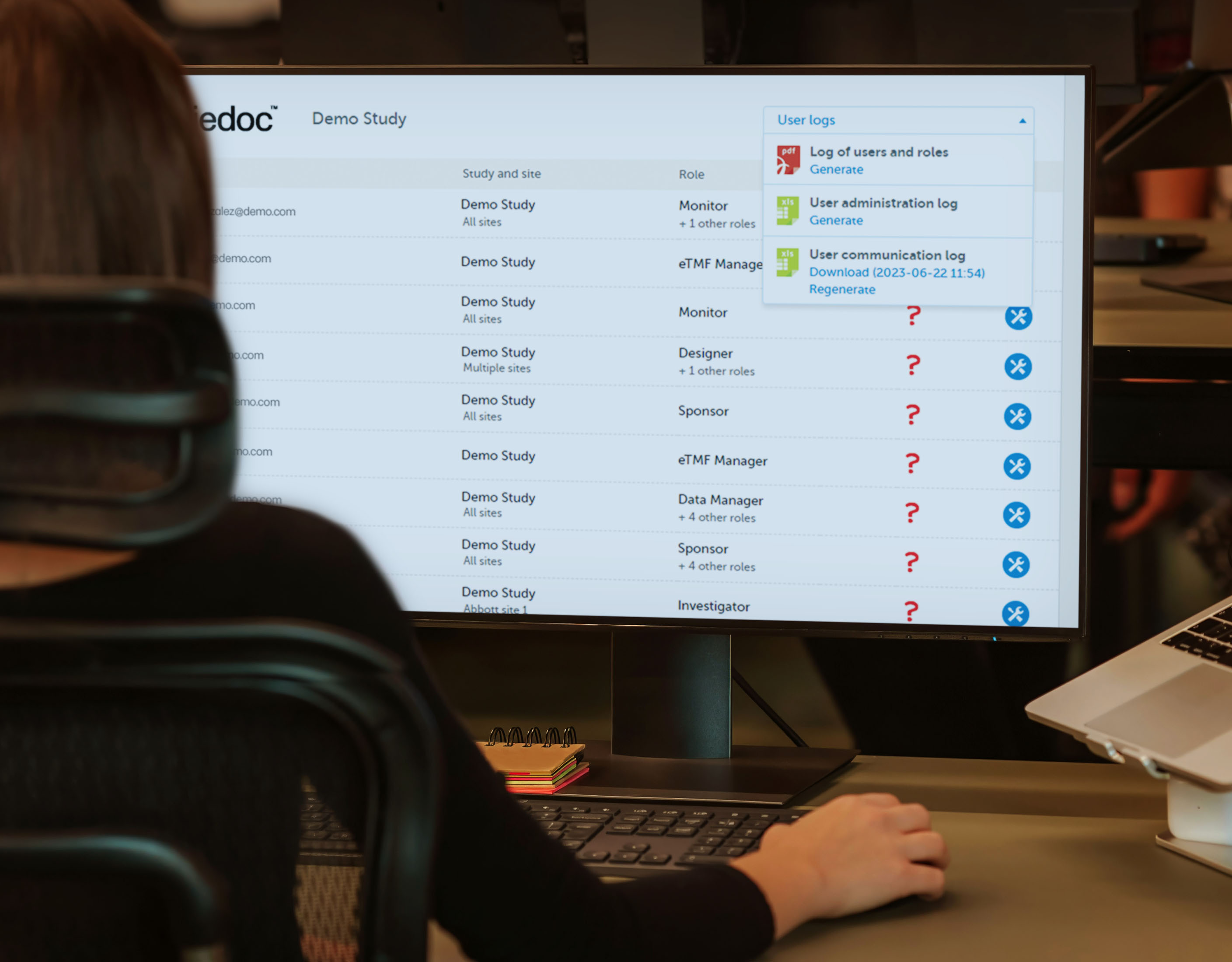
Woman sitting at her desk in front of a large computer monitor using a piece of software

Key takeaways: Decentralized clinical trials (DCT)

  • A DCT uses elements such as telehealth, home visits, local providers, direct product delivery, and remote data capture to move trial activities away from traditional sites.

  • FDA's 2024 guidance speaks of trials with decentralized elements; its regulatory requirements are the same as for other trials.

  • In the EU, a recommendation paper from the European Commission, HMA, and EMA guides the use of decentralized elements, and each Member State decides what it accepts.

  • For CROs and sponsors, the work is in the data flow: teams must map, validate, and protect every source.

Frequently asked questions about Decentralized clinical trials (DCT)

Related terms