Clinical trial sponsor

A clinical trial sponsor is the person or organization that starts a clinical trial and takes responsibility for it, including its management and the arrangement of its financing. It can be a company, academic institution, government agency, or individual. It may hand tasks to service providers such as a CRO, but keeps ultimate responsibility for participant safety and data reliability.

See how Viedoc works for sponsors.

What is a clinical trial sponsor?

A clinical trial sponsor, also known as a clinical study sponsor or trial sponsor, is "a person who takes responsibility for and initiates a clinical investigation" under drug regulations from the Food and Drug Administration (FDA). It can be an individual, a pharmaceutical company, a governmental agency, an academic institution, a private organization, or another organization (21 CFR 312.3). A sponsor-investigator is an individual who takes on both roles, starting the trial as sponsor and running it as investigator. The International Council for Harmonisation (ICH) E6(R3) guideline goes further, defining a sponsor as one who "takes responsibility for the initiation, management and arrangement of the financing of a clinical trial."

The European Union (EU) Clinical Trials Regulation defines a sponsor in almost the same terms (Article 2). If the sponsor isn't established in the EU, it must appoint a natural or legal person based in the EU as its legal representative (Article 74(1)).

For device studies, under 21 CFR 812.3(n), a sponsor is a person who initiates, but doesn't actually conduct, the investigation.

Why a clinical trial sponsor matters for CROs and sponsors

For a CRO

The sponsor is the client that keeps ultimate responsibility, so it'll ask where its data sits, how it can see progress, and how it gets its data back. A CRO that can't answer those questions leaves the sponsor exposed, because the sponsor answers for the result no matter who did the work.

For a sponsor

A sponsor can hire a CRO to do the work, but not to take on the responsibility. Under ICH E6(R3), ultimate responsibility for the sponsor's trial-related activities "resides with the sponsor," even when a CRO does the work. A first-time sponsor needs to know what it commits to before it signs with any provider. It should discuss specific obligations with its legal and quality teams.

The sponsor also has a direct stake in who chooses the electronic data capture (EDC) system, even when a CRO runs the study. Under the European Medicines Agency (EMA) guideline on computerized systems, the sponsor should clearly document and agree on the distribution of tasks with the CRO. It also considers who provides and controls the chosen computerized system.

Getting started with clinical trial sponsor duties

Before you take on a trial as its sponsor, work through these steps to confirm your role and what it involves.

  1. Confirm whether you're a sponsor or a sponsor-investigator for each study.

  2. Read the sponsor definitions in 21 CFR 312.3 (drugs) or 21 CFR 812.3(n) (devices), the EU Clinical Trials Regulation, and the ICH E6(R3) glossary.

  3. If you run trials in the EU from outside it, appoint a legal representative based in the EU.

  4. List which tasks you'll keep and which you'll hand to a CRO or other service provider.

  5. Decide who chooses the EDC and how you'll access your trial data.

  6. Plan how you'll oversee every provider, since ultimate responsibility stays with you.

Woman in a modern office sitting at a desk and working on her laptop

Sponsors and Viedoc

Inspection support included

Viedoc provides the Viedoc Inspection Readiness Packet (VIRP) to customers at no additional cost.

Unlimited users per study

Viedoc licenses per study with unlimited users, so the price depends on the solutions and study chosen, not on the number of users.

Running costs in one fee

The license fee covers maintenance, backups, hosting, versioning, unlimited user additions and changes, technical support, and upgrades.

A license for any pipeline

Viedoc offers a Single Study license and a Multiple License model for organizations running concurrent studies.

Data in open formats

Viedoc EDC supports data standards from the Clinical Data Interchange Standards Consortium (CDISC) and offers a REST API for custom integrations.

Access after lock

Read-only access to the study remains available after data lock.

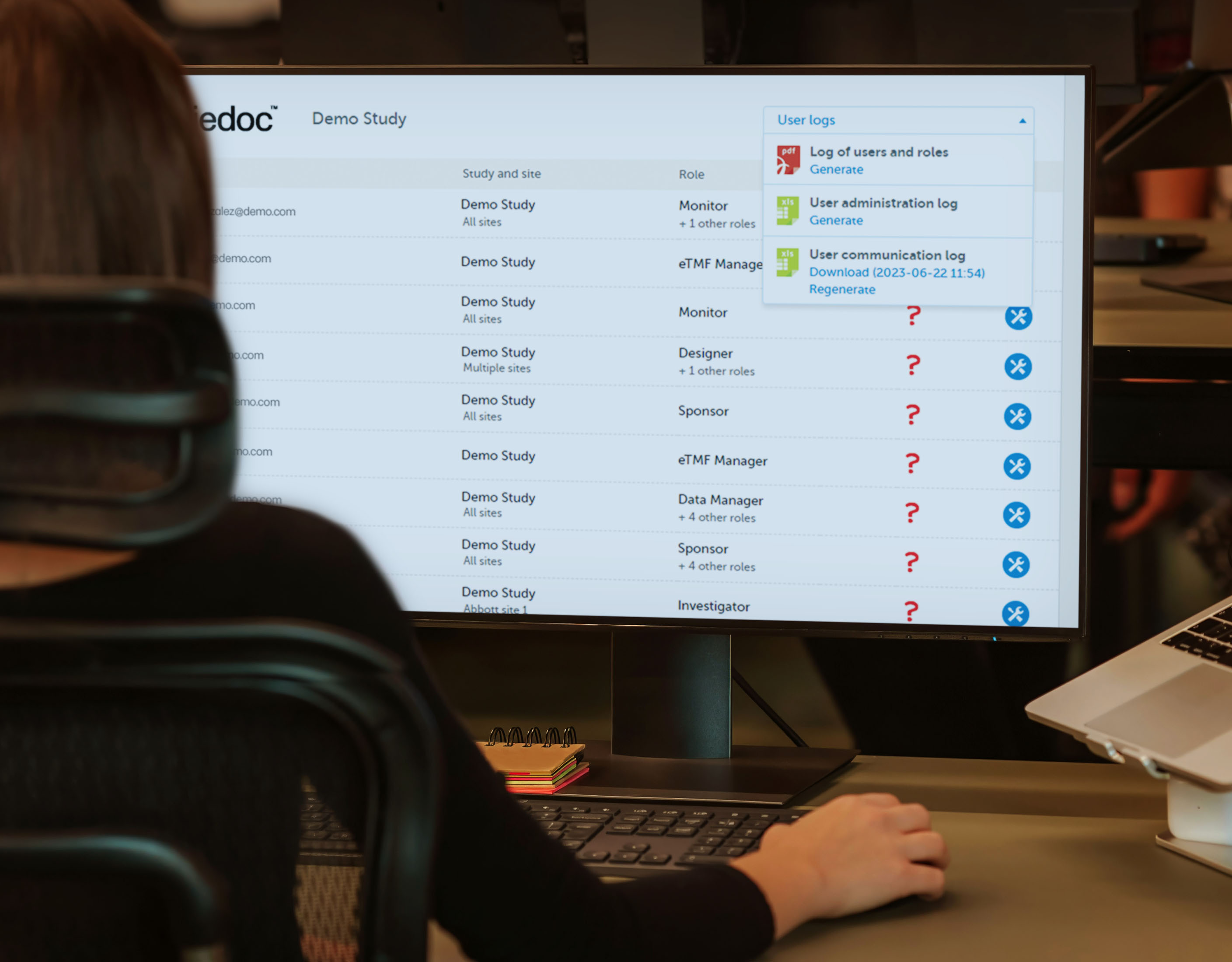
Woman sitting at her desk in front of a large computer monitor using a piece of software

Key takeaways: Clinical trial sponsor

  • A clinical trial sponsor starts a trial and takes responsibility for it, including management and arranging its financing.

  • A sponsor can be a company, academic institution, government agency, or individual.

  • A sponsor can hand tasks to a CRO but keeps ultimate responsibility.

  • The sponsor doesn't conduct the trial unless it's a sponsor-investigator.

Frequently asked questions about clinical trial sponsor

Related terms

CRO

A service provider that carries out duties the sponsor transfers to it. Ultimate responsibility stays with the sponsor.

Investigator

Conducts the trial at the site and works directly with participants. The sponsor doesn't do this work itself, unless it's also a sponsor-investigator.

Sponsor-investigator

An individual who both starts a trial and conducts it, holding the sponsor's and the investigator's roles at once.

Funder

Pays for the trial, but isn't necessarily the sponsor. Under ICH E6(R3), sponsorship also covers a trial's initiation and management, not just its financing.

ICH E6(R3)

The international Good Clinical Practice guideline for running trials. Its glossary defines the sponsor, and section 3.6.6 keeps ultimate responsibility with the sponsor.

Clinical data management

The handling of trial data, for which the sponsor answers as the party responsible for data reliability.

Clinical trial management system (CTMS)

Software that sponsors, CROs, and sites use to plan, track, and manage trial operations.